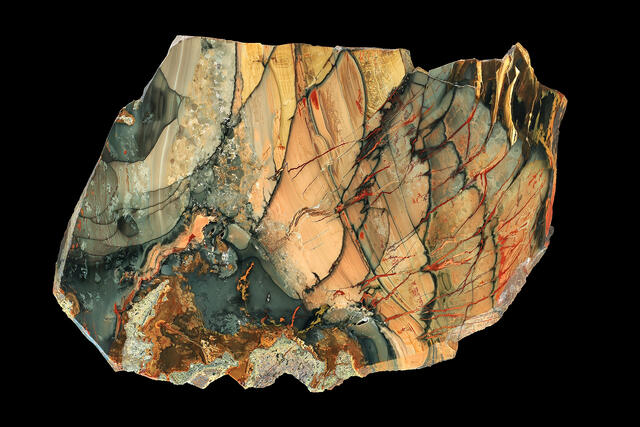
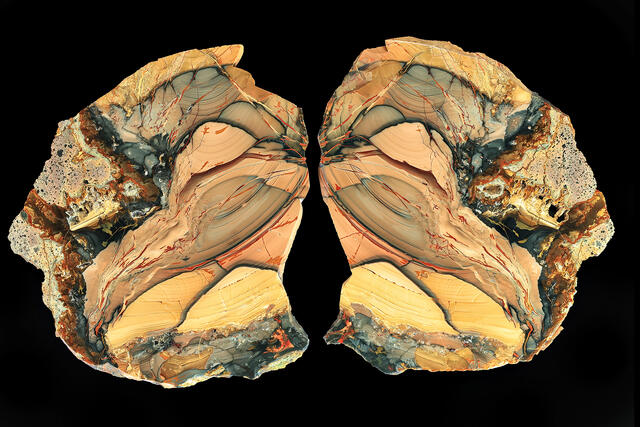
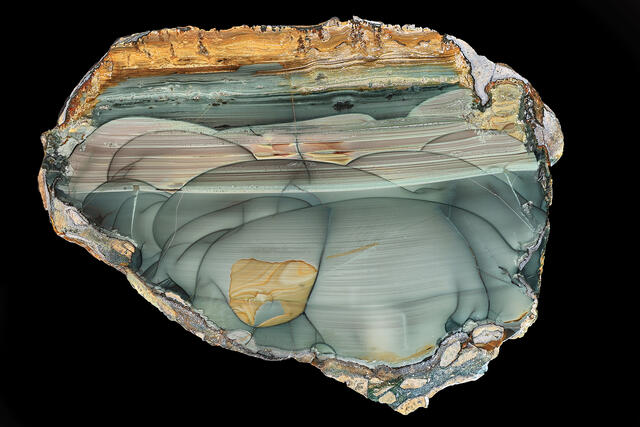
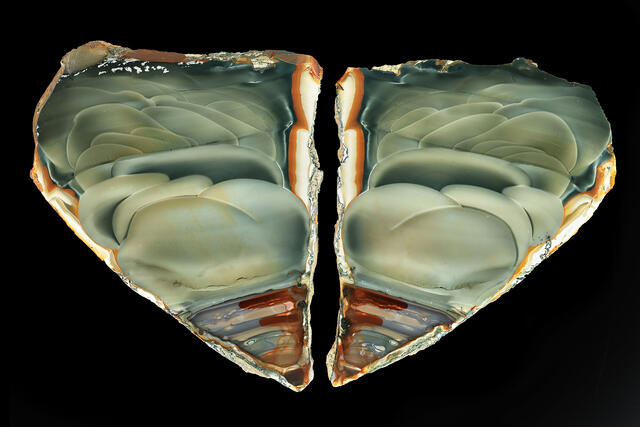
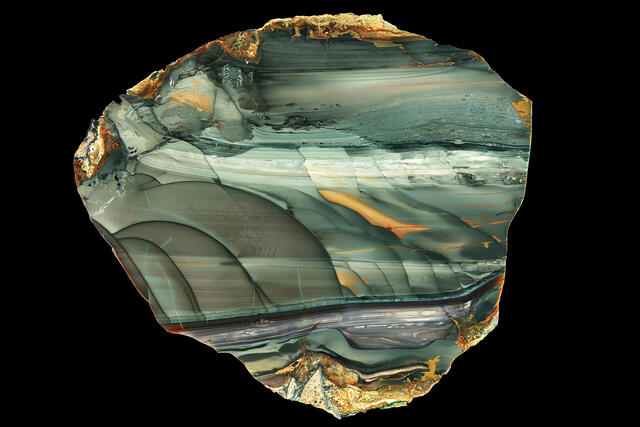
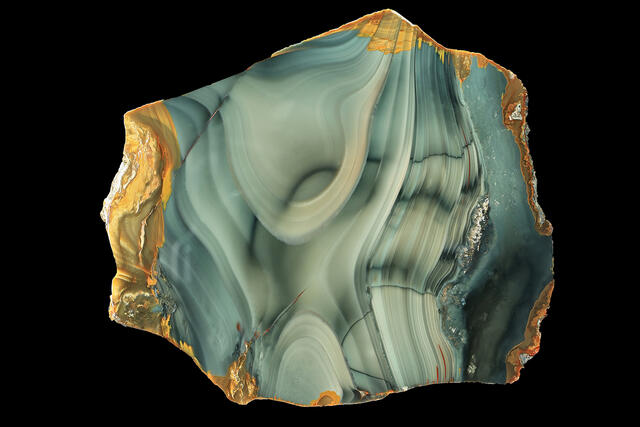
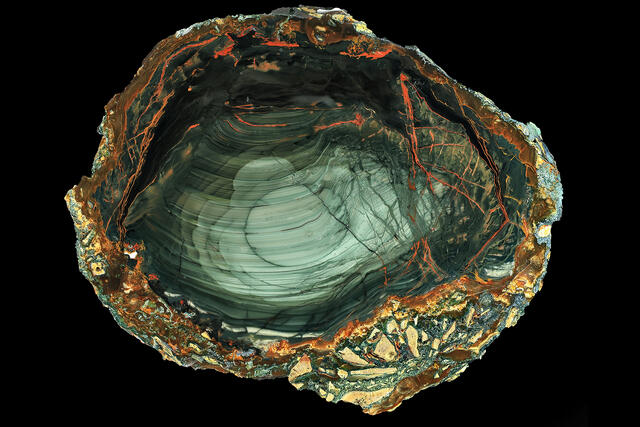
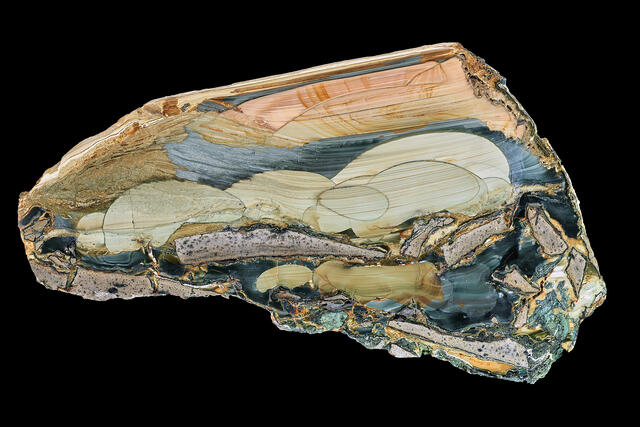
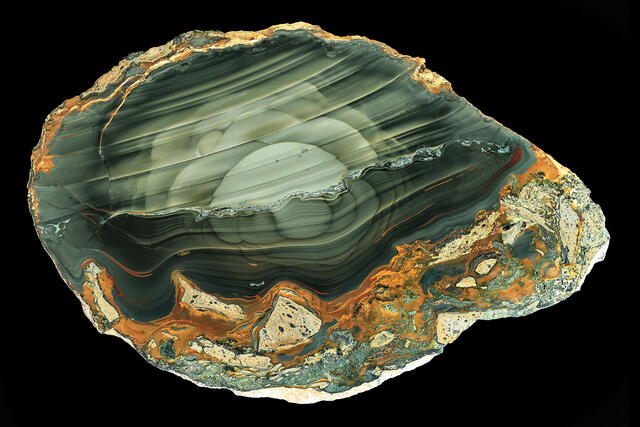
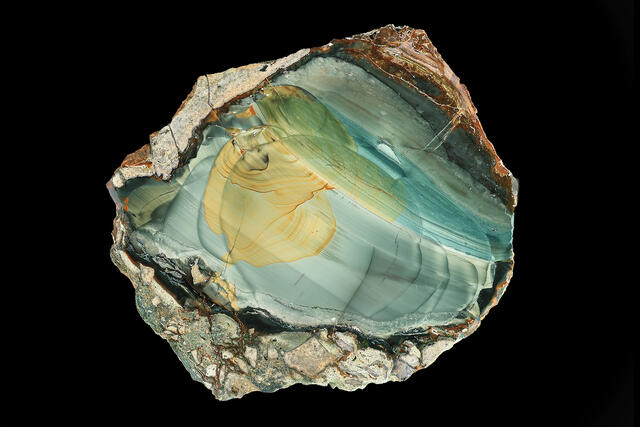
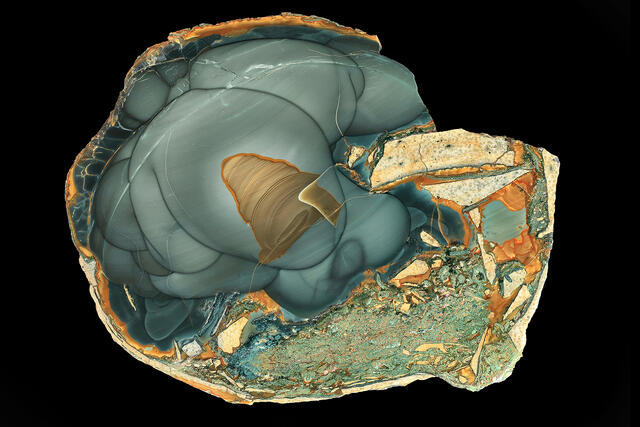
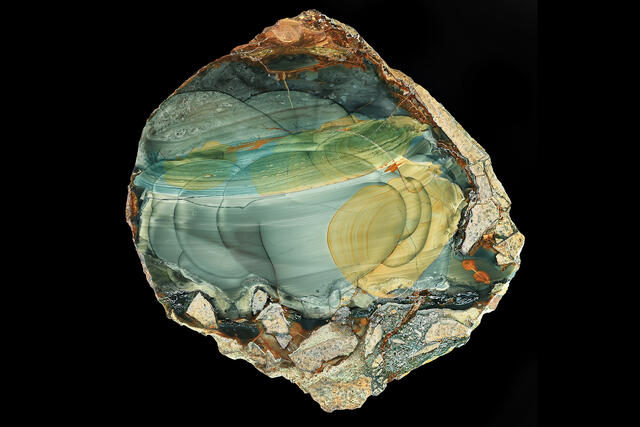
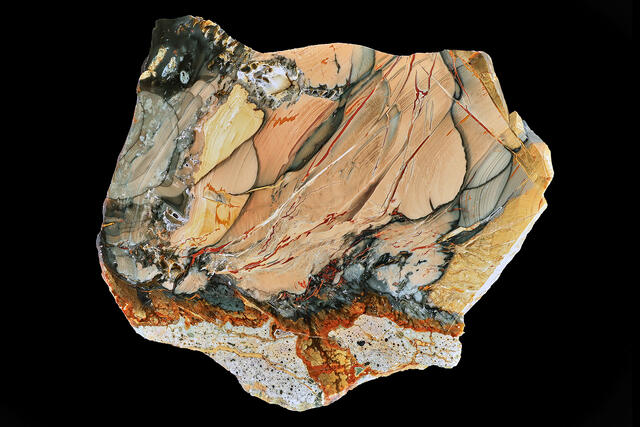
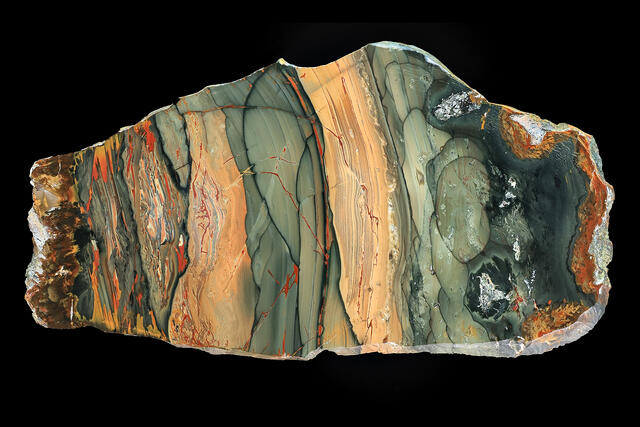
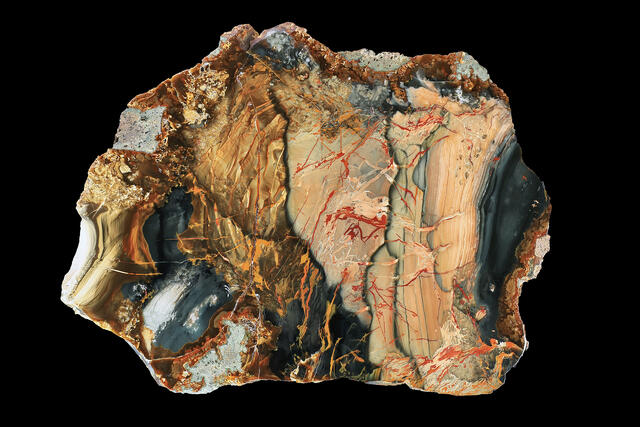
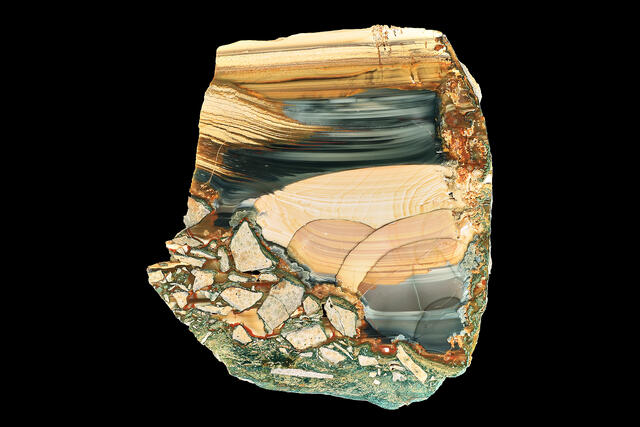
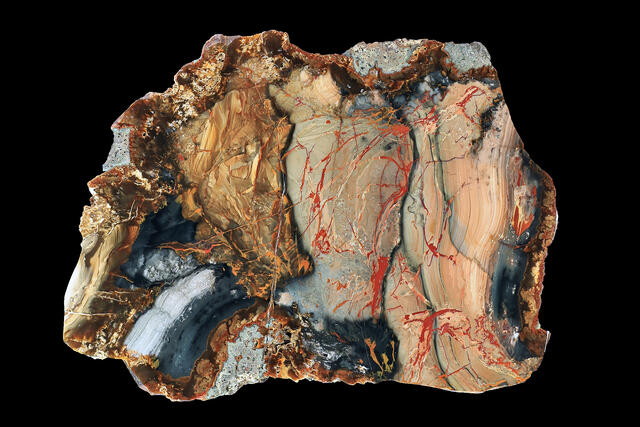
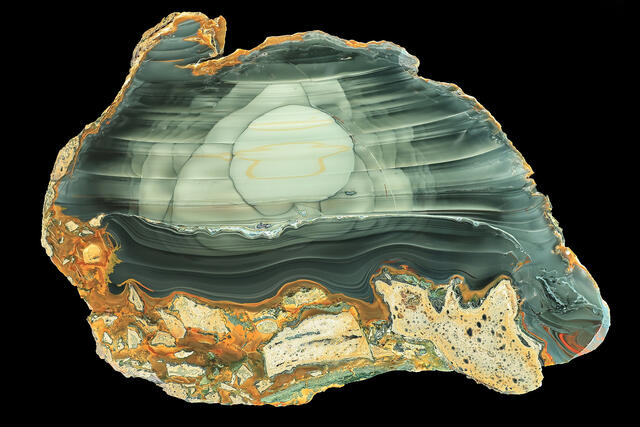
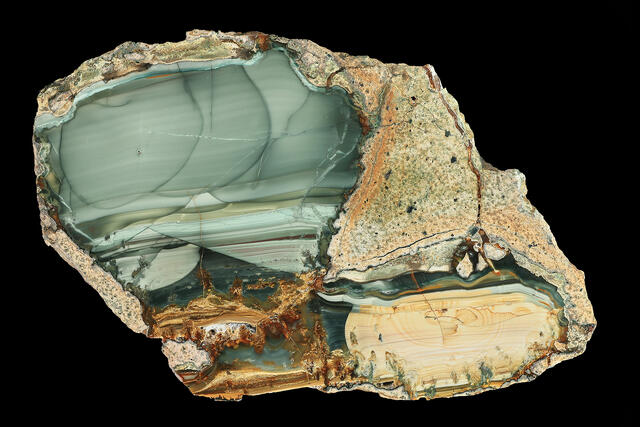
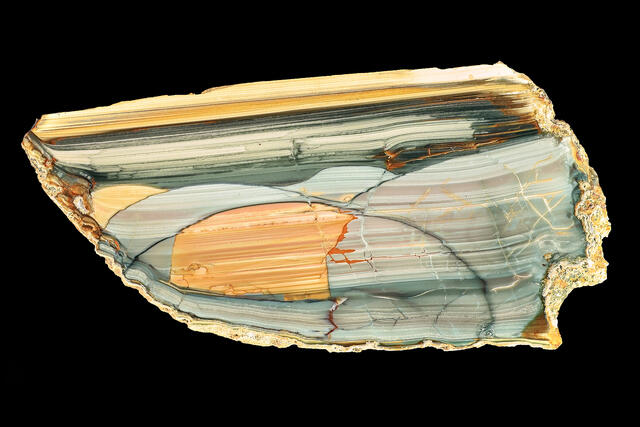
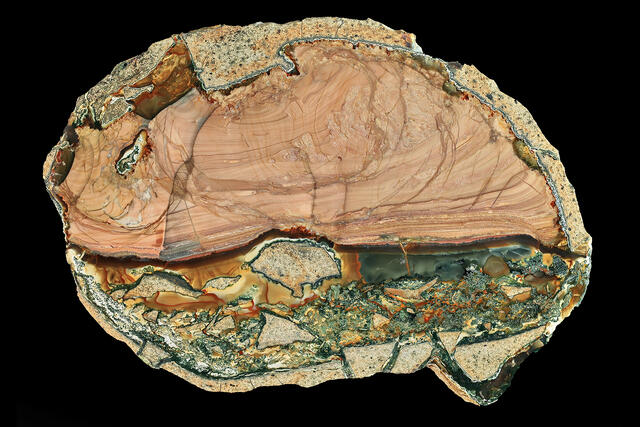
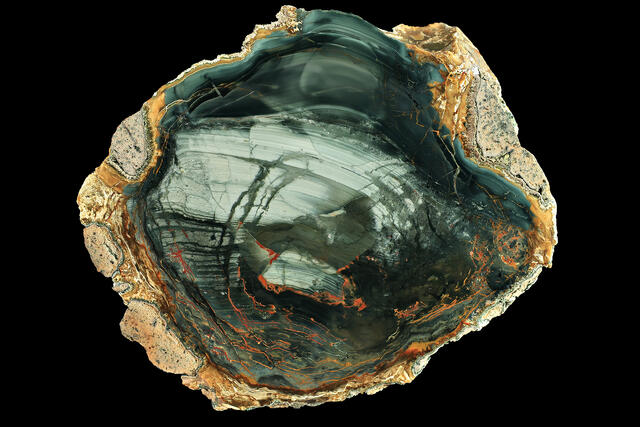
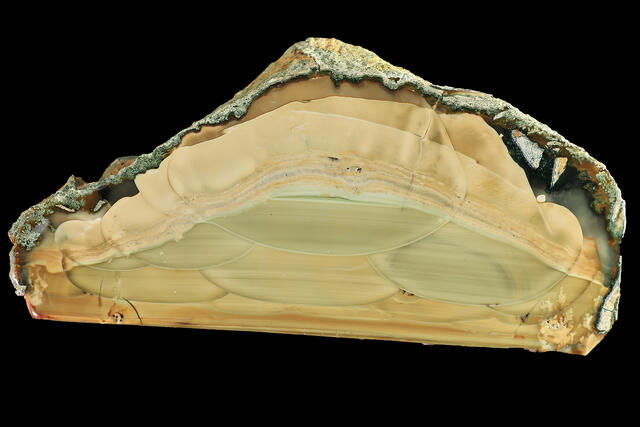
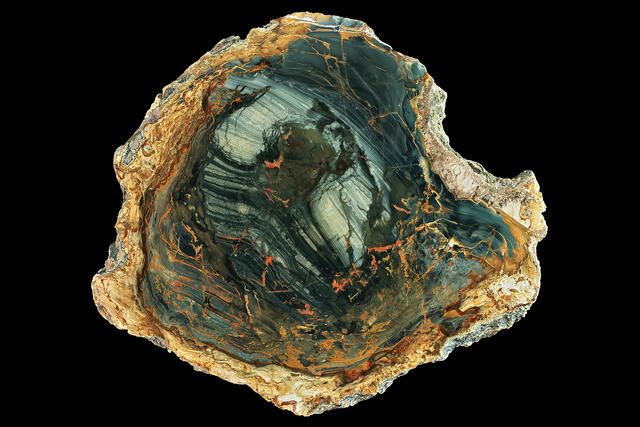
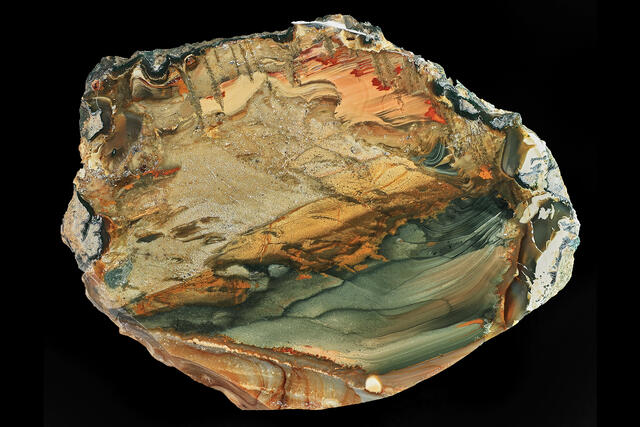
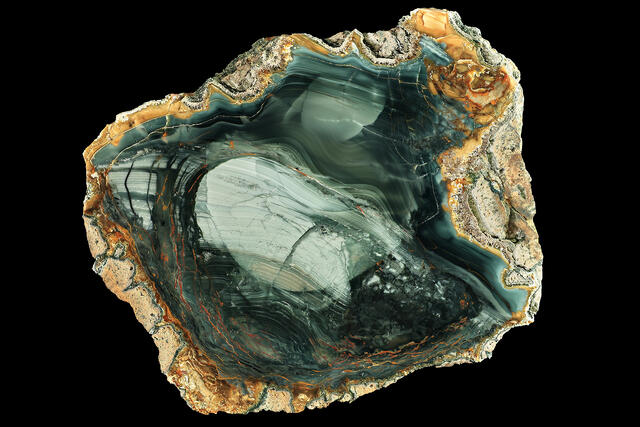
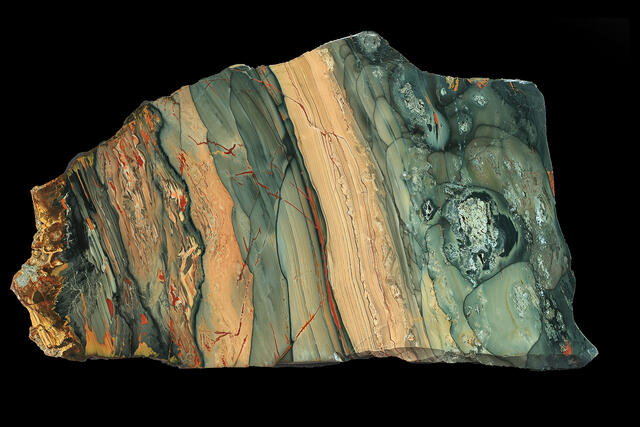
What makes Blue Mountain Jasper especially significant is its origin. It is found exclusively in a remote region of eastern Oregon, near the Blue Mountains and areas such as McDermitt. Unlike widely distributed gemstones, this material comes from a single, limited source—one that has seen little to no active mining in recent decades. The majority of specimens available today were collected long ago and now circulate through private collections, estate holdings, and specialty dealers.
This geographic isolation contributes directly to its rarity. Blue Mountain Jasper is widely regarded as a “closed-source” stone—meaning the supply is finite and steadily diminishing. As existing material is cut, collected, and absorbed into permanent collections, fewer high-quality specimens remain available on the market. This scarcity, combined with its unmistakable visual character, has elevated it to a prized status among lapidaries, collectors, and designers alike.
In terms of value, Blue Mountain Jasper stands apart from more common jaspers. While jasper in general is abundant, exceptional varieties derive their worth from pattern, color, and rarity. Blue Mountain Jasper excels in all three: its painterly compositions, soothing blue tones, and limited supply make high-grade pieces especially desirable. Large, vividly patterned slabs or well-documented specimens can command premium prices, particularly when their provenance traces back to early mining periods.
Beyond its collectible appeal, Blue Mountain Jasper has long been favored for its versatility and working qualities. With a hardness of approximately 6.5–7 on the Mohs scale, it is durable enough for jewelry and takes an exceptional polish. Artisans shape it into cabochons for rings and pendants, carve it into decorative objects, or preserve it as display slabs that highlight its natural imagery. Each finished piece becomes a collaboration between nature and craft, where the cutter’s skill reveals the hidden landscape within the stone.
This gallery celebrates that intersection—where geology, rarity, and artistry converge. Every specimen you encounter here carries a sense of place, a trace of deep time, and a uniqueness that ensures no two are ever alike. Blue Mountain Jasper does not dazzle with brilliance; it captivates with depth, subtlety, and story—inviting you to look closer, and to see the earth as an artist in its own right.