Blue Mountain Jasper: Rare Oregon Gemstone, History, Value & Uses
Blue Mountain Jasper: A Rare American Stone
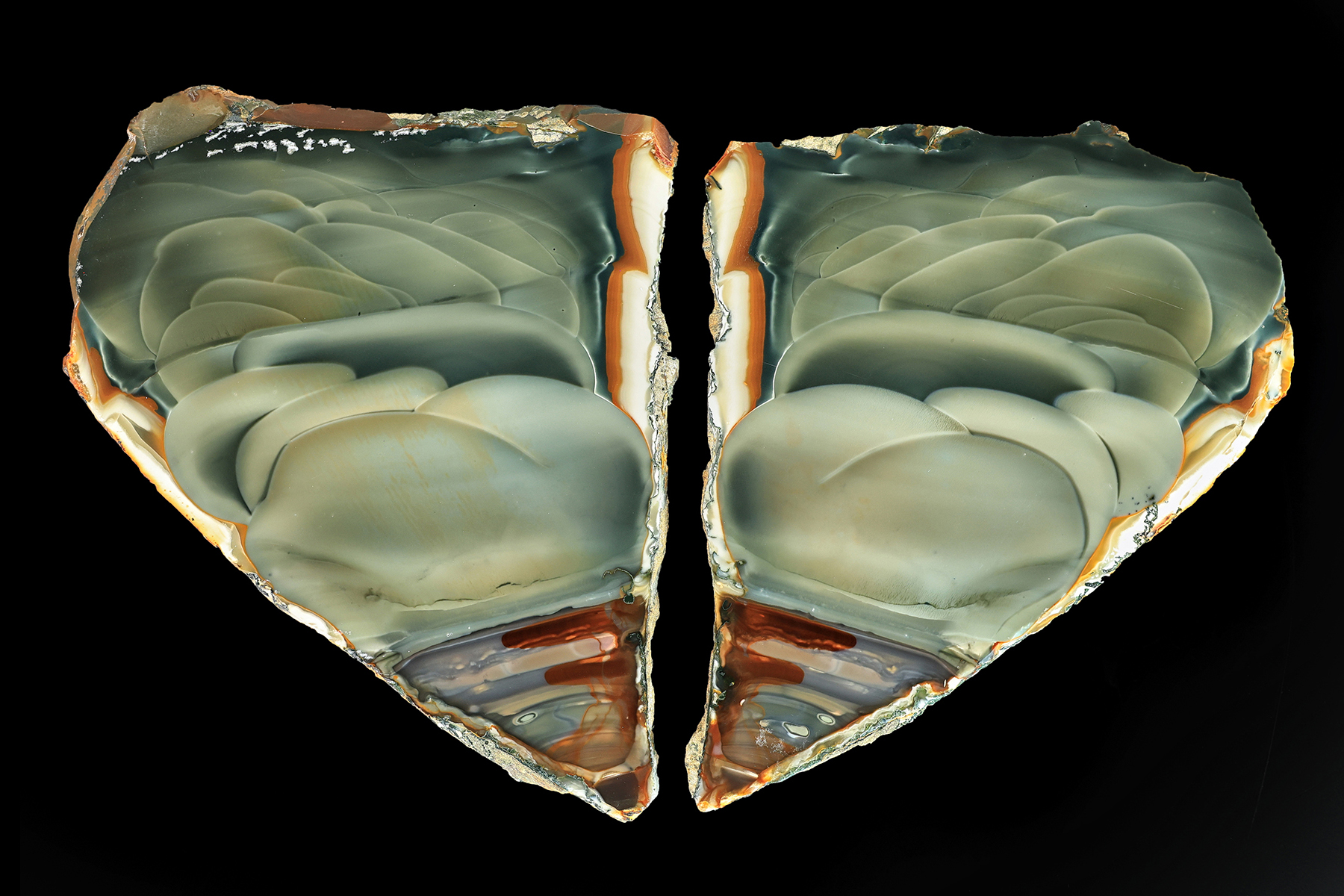
Some stones demand attention with brilliance and fire. Others invite you in slowly—through texture, depth, and story. Blue Mountain Jasper belongs firmly in the second category. Revered for its painterly patterns, muted blues, earthy creams, and storm-like movement, this American jasper is as much a geological artifact as it is a work of natural art.
Coveted by collectors and lapidaries, and increasingly admired by interior designers and crystal enthusiasts, Blue Mountain Jasper stands apart for its rarity, visual complexity, and sense of place. To understand its value, we must begin where all great stones begin: deep in the land itself.

The Geological Story Behind Blue Mountain Jasper
Blue Mountain Jasper is a variety of jasper—a microcrystalline form of quartz—formed through volcanic and sedimentary processes over millions of years. Unlike brightly banded jaspers, this stone is known for its soft, atmospheric coloration and layered compositions that resemble abstract paintings or aerial landscapes.
Its blues range from slate and steel to pale sky tones, often interwoven with:
- Creams and ivories
- Rusty reds and iron browns
- Occasional greens or smoky grays
These patterns are the result of mineral-rich fluids seeping through volcanic ash layers and compacted sediments, depositing silica along with trace minerals that create color and movement.
No two pieces are alike—and that uniqueness is central to its appeal.
Geographical Origins: A Stone Rooted in the American West
Blue Mountain Jasper is found exclusively in a remote region of eastern Oregon, within the Blue Mountains area from which it takes its name. This geographic limitation is one of the reasons the stone is so highly prized.
Key aspects of its origin include:
- Remote, rugged terrain that limits access
- Small, non-commercial deposits rather than large mining operations
- Most material was collected decades ago, with little to no active production today
Because of this, Blue Mountain Jasper is considered a closed or near-closed source stone, meaning what exists in private collections and old stock is largely all that remains available.
Visual Characteristics: Why Blue Mountain Jasper Is So Striking
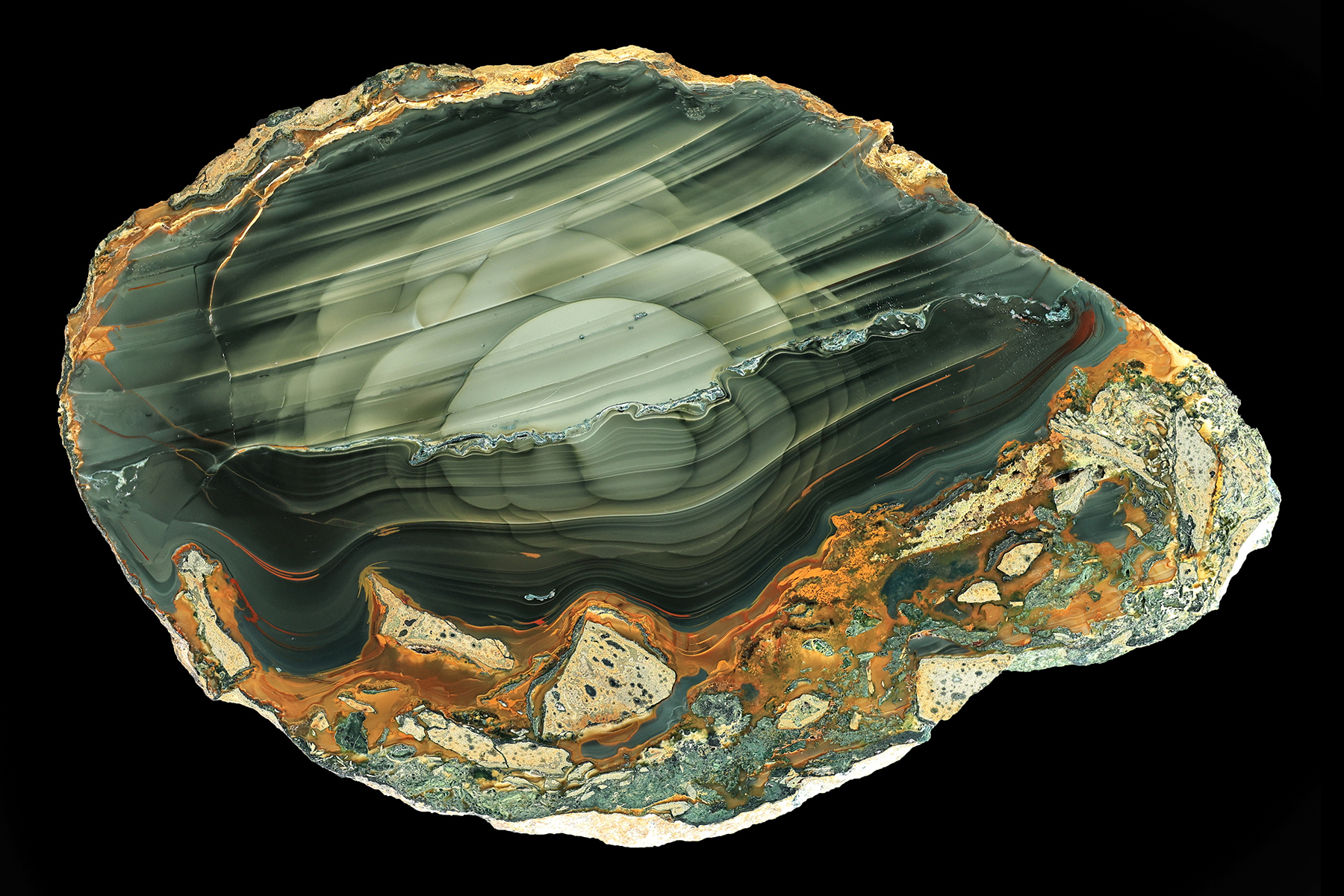
What makes Blue Mountain Jasper truly special is not flash—but depth.
Visually, the stone is often described as:
- Painterly
- Moody
- Earth-driven
- Meditative
Many slabs resemble:
- Storm clouds rolling over plains
- Satellite images of deserts and rivers
- Abstract expressionist paintings
This makes it especially appealing for:
- Statement cabochons
- Collector slabs
- Display specimens
- Artistic inlay work
When polished, the stone develops a soft, glassy luster that enhances its internal movement without overpowering its natural subtlety.
Lapidary Uses: A Favorite Among Skilled Stone Artists
Blue Mountain Jasper is considered a lapidary-grade material, but it rewards patience and skill.
Common Lapidary Applications
- Cabochons for rings and pendants
- Freeform shapes emphasizing natural patterns
- Matched pairs for high-end jewelry
- Thin slabs for display or framed stone art
Working Properties
- Generally takes an excellent polish
- Hard enough for jewelry (Mohs ~6.5–7)
- Pattern placement is critical—orientation matters
Because of its rarity, lapidaries often reserve Blue Mountain Jasper for special projects, rather than mass production.
Collector Value: Why Blue Mountain Jasper Is So Desired
Among serious collectors, Blue Mountain Jasper holds a quiet prestige. It is not a stone of trends—it is a stone of knowledge and appreciation.
Factors driving its collector value include:
- Finite supply
- Distinctive, recognizable patterns
- Strong American provenance
- High demand with limited availability
Exceptional pieces—especially large slabs with strong blue coloration—can command significant prices, particularly when provenance is documented.
Collectors often seek:
- Old-stock rough
- Estate lapidary material
- High-grade slabs with minimal fractures
As time passes, well-documented Blue Mountain Jasper continues to appreciate.
Rarity and Availability: A Stone That Is Disappearing
Unlike many jaspers that are still actively mined, Blue Mountain Jasper is increasingly difficult to find. Most material available today comes from:
- Private collections
- Old lapidary stock
- Rock shows and specialty dealers
This rarity elevates not only its monetary value but its cultural and geological importance. Each cut stone represents a piece of American lapidary history that will not be easily replaced.
Conclusion: A Stone of Subtle Power and Lasting Legacy
Blue Mountain Jasper is not loud. It does not sparkle or shout. Instead, it speaks in layers—of land, time, and artistry. Its beauty lies in restraint, its value in rarity, and its appeal in the way it bridges geology and art.
For lapidaries, it is a material worthy of respect.
For collectors, it is a finite treasure.
For admirers, it is a quiet masterpiece shaped by the earth itself.
As supplies continue to disappear into private collections and finished works, Blue Mountain Jasper stands as a reminder that some of the most powerful natural art is not the brightest—but the most enduring.